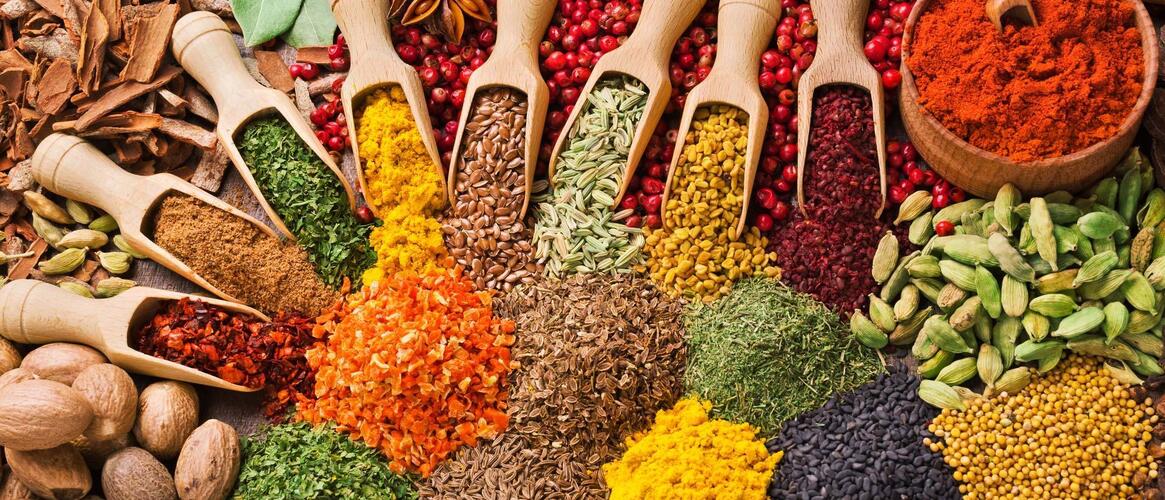
Composition of Seasonings and Their Special Properties
Seasonings, when preparing dishes, create the main flavor note of food, giving a certain direction to their use in cooking. At the same time, seasonings themselves consist of a number of spices, herbs, and aromatic ingredients. In other words, a complex proportional combination of spices creates high-quality seasonings that determine the final taste of an individual dish and, in some cases, an entire culinary tradition. Today, we can confidently state that modern cooking is impossible without the use of complex seasonings. A special feature of seasonings is that they do not have a specific form and, unlike spices and flavorings, which can be used during cooking or consumed with food in their finished form, require preparation. Thus, seasonings simultaneously improve the taste of the main dish and can exist as a separate culinary product with its own preparation recipe.
Preparing Seasonings
In traditional cooking, seasonings are prepared by chefs using a wide range of herbs and spices. This process requires a variety of food ingredients. They are divided into three main groups:
- Aromatic additives
- Herbs
- Spices.
All of them, together or separately, are included in the composition of multicomponent seasonings. Therefore, preparing seasonings requires certain culinary knowledge, a refined sense of taste, and the ability to combine individual flavors into harmonious compositions. This explains why the preparation of seasonings is not widespread, although ready-made seasonings are widely used by chefs. The availability of ready-made seasonings has minimized their preparation in the food service industry and practically eliminated it from the home. In addition, the widespread use of the most popular seasonings – mayonnaise, mustard, tomato paste, and ketchup – has pushed aside a wide range of other seasonings that have equally rich flavors.
Composition and Properties of Seasonings
When we have established the place of seasonings in cooking among other groups of food flavor enhancers, it remains to discuss their composition and properties. Seasonings include a large group of both individual food products and their combinations. Based on the main culinary purpose of seasonings – to give food an exquisite taste and create a specific flavor profile around the main component of a dish – it becomes clear that some seasonings are more suitable for providing a food with an aromatic and flavorful palette, while others serve as a medium that binds the ingredients of a dish together. Of course, there are some seasonings that combine these properties, but from the perspective of preparation and consumption, they are still divided into several types. The most numerous type of seasoning is sauces. A sauce is such a self-sufficient seasoning in cooking that sauces themselves are divided into eight types. The main type of sauces is the so-called "French" sauces. Their base usually consists of eggs (whites or yolks), flour, and butter. Broth (meat, fish, or chicken), vegetable or fruit and berry juices, milk, cream, or water is used as the liquid component. Spices – salt, sugar, or vinegar – are also important components of sauces, giving the dish their specific taste. Depending on their flavor profile, sauces are divided according to the type of dish: there are sauces for meat dishes or specifically for fish or desserts. Further development of cooking led to the "specialization" of sauces; for example, there are separate sauces for fried fish and others for boiled fish, etc. However, such narrow specialization has led to a decline in the popularity of these sauces, and they cannot compete with traditional seasonings such as mayonnaise or mustard, which are equally used when preparing meat, fish, or vegetables.
Ready-Made Seasonings from Blends of Spices and Herbs
The development of the food industry in the 20th century led to the unification of culinary processes and the emergence of semi-finished and ready-to-use food products. This process also affected the preparation of seasonings. Industrial food production can offer consumers a wide range of ready-made seasonings made from blends of spices and herbs, both for universal use and for specific purposes. The ЦветАромат brand has a wide range of ready-made seasonings for preparing meat, poultry, fish, vegetables, and first courses, as well as for making marinades and even beverages. Ready-made seasoning recipes contain only high-quality spices and herbs in proportions and quantities that best meet the culinary requirements for preparing a particular dish. The most commonly used ingredients in recipes include peppers (black, allspice, and red), cloves, bay leaves, cinnamon, nutmeg, coriander, paprika, turmeric, parsley, dill, basil, oregano, marjoram, dried garlic and onion, and many other ingredients. Such a wide range of seasonings allows the end consumer not only to enrich and improve their diet but also to simplify the cooking process and reduce the amount of time spent on cooking.